If you’ve typed this question into Google, you’ve probably already noticed the problem. Every article gives you a different number. Some say twice a week. Some say when the top inch of soil is dry. Some just tell you to “listen to your plant,” which is not helpful advice when you’re standing in your kitchen holding a watering can, staring at a pothos, wondering if you’re about to drown it or starve it.
Here’s the honest truth: there is no single watering schedule that works for every plant, every pot, and every home. A fiddle leaf fig in a sunny Arizona apartment and the same fiddle leaf fig in a dim Seattle living room have completely different watering needs, even though they’re the same species. Watering frequency isn’t a fixed number. It’s a moving target based on a handful of factors you can actually learn to read.
This guide walks through those factors, gives you real numbers to start from, and explains how to adjust as your specific conditions change. By the end, you’ll be able to look at almost any plant and make a confident call instead of guessing.
Why “Water Once a Week” Is Bad Advice
Most generic watering advice fails because it treats every plant like it lives in identical conditions. But two identical plants in two different homes can need watering on completely different timelines, sometimes weeks apart.
A snake plant sitting in a terracotta pot near a south-facing window in a dry climate might need water every two to three weeks. The same snake plant in a plastic pot in a humid, low-light bathroom could go five or six weeks without needing a drop. Follow the “once a week” rule with either of these and you’ll likely end up with root rot, yellowing leaves, or a mushy stem.
Instead of memorizing a number, it helps to understand what actually determines how fast soil dries out and how much water a plant can use.
The Soil Test: Your Most Reliable Tool
Before diving into specific plants, learn this one habit. It will do more for your plants than any watering calendar ever could.
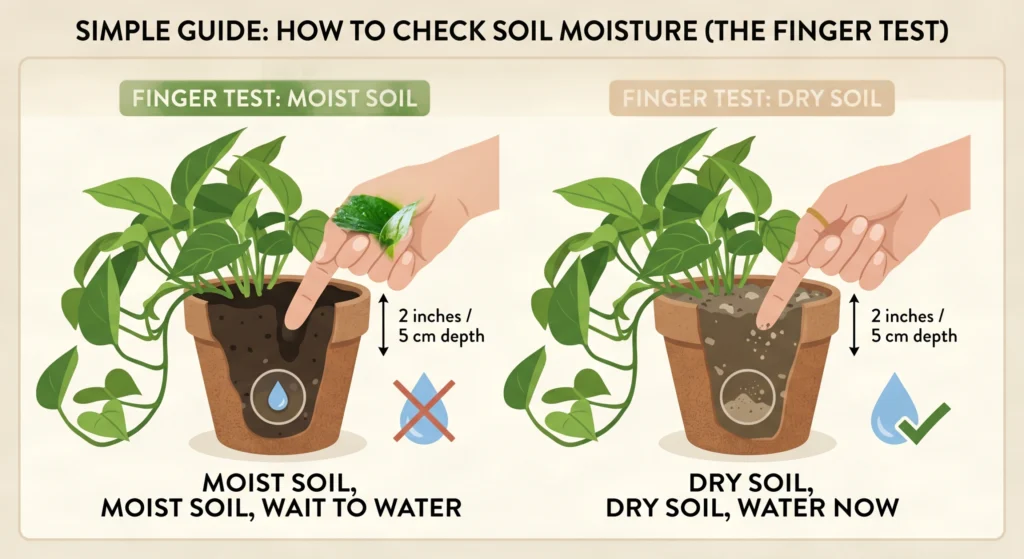
Stick your finger into the soil, about two inches deep. If it feels moist, wait. If it feels dry at that depth, it’s usually time to water. This works for the vast majority of houseplants, from pothos to peace lilies to most succulents.
If you don’t want to get your hands dirty, a cheap moisture meter from a hardware store works just as well and takes the guesswork out entirely. Either method beats watering on autopilot because it responds to what’s actually happening in the pot, not what a schedule assumes is happening.
For outdoor garden beds, the same principle applies but at a slightly deeper level. Dig down three to four inches with a trowel or your finger. Garden soil holds moisture longer than potted soil, so surface dryness doesn’t always mean the roots are thirsty.
Factors That Actually Determine Watering Frequency
Plant Type
Different plants evolved in different climates, and their water needs reflect that history.
- Succulents and cacti store water in their leaves and stems, so they’re built for long dry stretches. Watering every two to three weeks is typical, sometimes longer in winter.
- Tropical foliage plants like monstera, philodendron, and pothos come from rainforest floors where moisture is constant but drainage is fast. These usually want water once the top inch or two of soil dries out, often every seven to ten days.
- Ferns tend to want consistently moist soil and struggle if they dry out completely, so they often need water twice a week, especially in dry indoor air.
- Flowering plants, both indoor and outdoor, generally need more frequent watering while they’re actively blooming, since flower production takes a lot of energy and water.
Pot Material
The container matters more than people expect. Terracotta and unglazed clay pots are porous, so water evaporates through the sides as well as the top. Plants in these pots dry out noticeably faster than the same plant in a plastic or glazed ceramic pot. If you recently switched pot types, don’t be surprised if your old watering rhythm no longer fits.
Pot Size and Root-to-Soil Ratio
A plant that’s outgrown its pot, with roots circling tightly around the inside, will dry out much faster because there’s less soil left to hold water. On the flip side, a small plant in an oversized pot holds onto moisture longer, and can actually be at higher risk of overwatering because so much soil stays wet around a small root system.
Light Exposure
More light generally means faster soil drying, since heat and light both accelerate evaporation and the plant’s own water use through photosynthesis. A plant moved from a shaded corner to a bright windowsill will need water more often, sometimes significantly so.
Season and Temperature
Growth slows down for most plants during fall and winter, even indoors, as daylight hours shrink. That means less water uptake and slower soil drying. It’s one of the most common mistakes: watering a plant on the same summer schedule through winter, which is a fast track to root rot when growth has essentially paused.
Humidity
Homes with dry heating in winter dry out soil faster than you’d expect, even without direct sun. Meanwhile, bathrooms and kitchens tend to stay more humid, which slows down soil drying and stretches out the time between waterings.
Signs You’re Overwatering
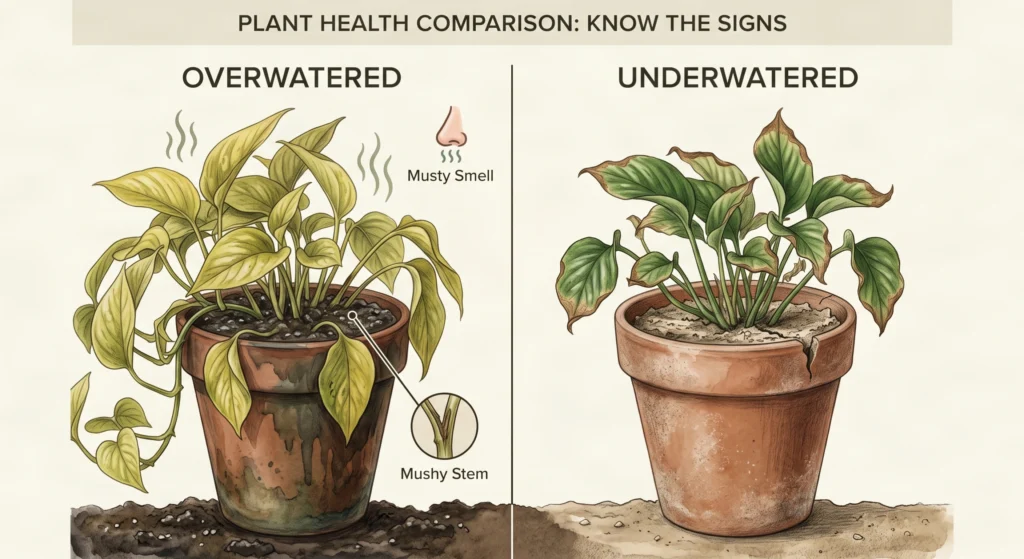
Overwatering is the single most common way houseplants die, more common than neglect. It often looks like the plant needs more water, which makes people water even more, and the cycle gets worse.
Watch for these signs:
- Leaves turning yellow, especially lower leaves first
- Soil that stays soggy days after watering
- A musty or sour smell coming from the pot
- Soft, mushy stems near the base
- Leaves dropping even though they look otherwise healthy
- Fungus gnats hovering around the soil surface
If you notice several of these at once, let the soil dry out fully before watering again, and check the roots if you can. Healthy roots are firm and usually white or tan. Root rot looks dark, feels mushy, and often smells unpleasant.
Signs You’re Underwatering
Underwatering is easier to fix and less dangerous, but it still stresses a plant if it happens repeatedly.
- Soil pulling away from the edges of the pot
- Leaves curling inward or drooping, especially by afternoon
- Crispy, brown leaf edges or tips
- Slow or stalled growth
- Soil that feels bone dry and light when you lift the pot
A good trick for judging underwatering in a container is simply lifting the pot. Dry soil is noticeably lighter than moist soil, and once you get a feel for the weight difference, you’ll be able to tell at a glance without even touching the soil.
An old greenhouse worker once told me the trick isn’t learning a schedule, it’s learning to read the pot the way you’d read a person’s mood. The signs are there. You just have to actually look.
How Often to Water, By Plant Category
These are starting points, not rules carved in stone. Use them as a baseline and adjust based on the soil test.
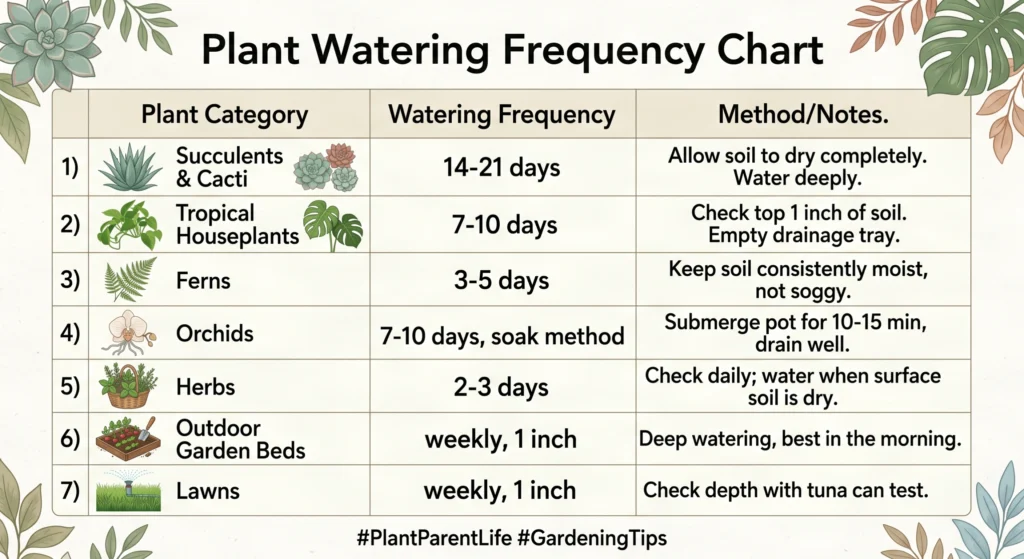
Succulents and cacti: Every 14 to 21 days indoors, less often in winter. Water deeply, then let the soil dry out completely before the next watering.
Tropical houseplants (pothos, philodendron, monstera): Every 7 to 10 days, checking soil moisture first. These plants tolerate a bit of drying between waterings better than they tolerate sitting wet.
Ferns and moisture-loving plants: Every 3 to 5 days, keeping soil consistently damp but not waterlogged.
Orchids: Once every 7 to 10 days, usually by soaking the roots for ten to fifteen minutes rather than pouring water over the top of the potting mix.
Herbs (basil, mint, parsley): Every 2 to 3 days in warm weather, since herbs in small pots dry out fast and wilt quickly once they run dry.
Outdoor garden beds: One deep watering per week is often enough during moderate weather, roughly an inch of water total. During heat waves, that can jump to two or three times a week.
Lawns: Most established lawns do well with about an inch of water per week, whether from rainfall or irrigation, applied in one or two sessions rather than daily light sprinkling.
Watering Technique Matters as Much as Frequency
How you water can be just as important as when you water.
Shallow, frequent sprinkles encourage roots to stay near the surface, which makes plants more vulnerable to drying out and less resilient overall. Deep, less frequent watering encourages roots to grow downward in search of moisture, building a stronger and more drought-tolerant plant.
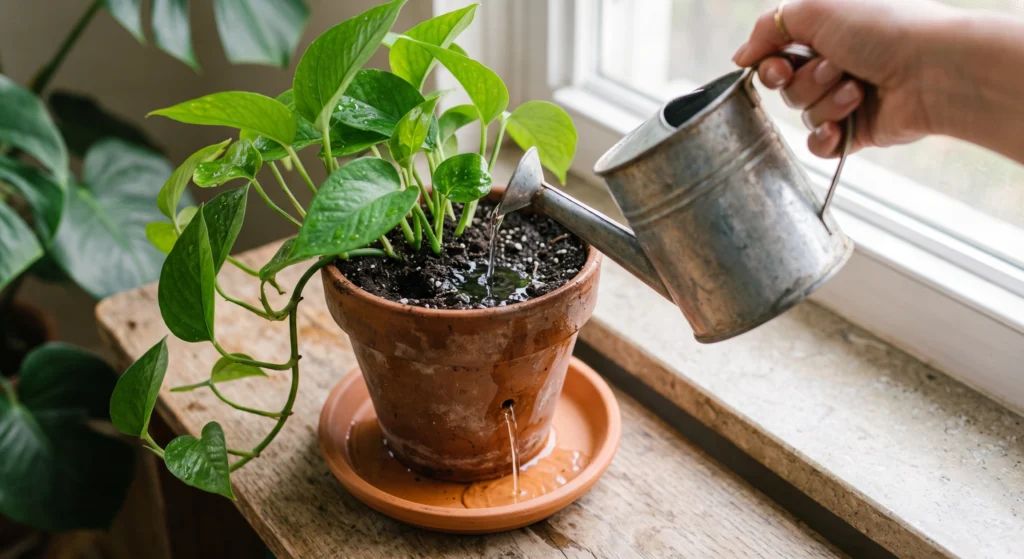
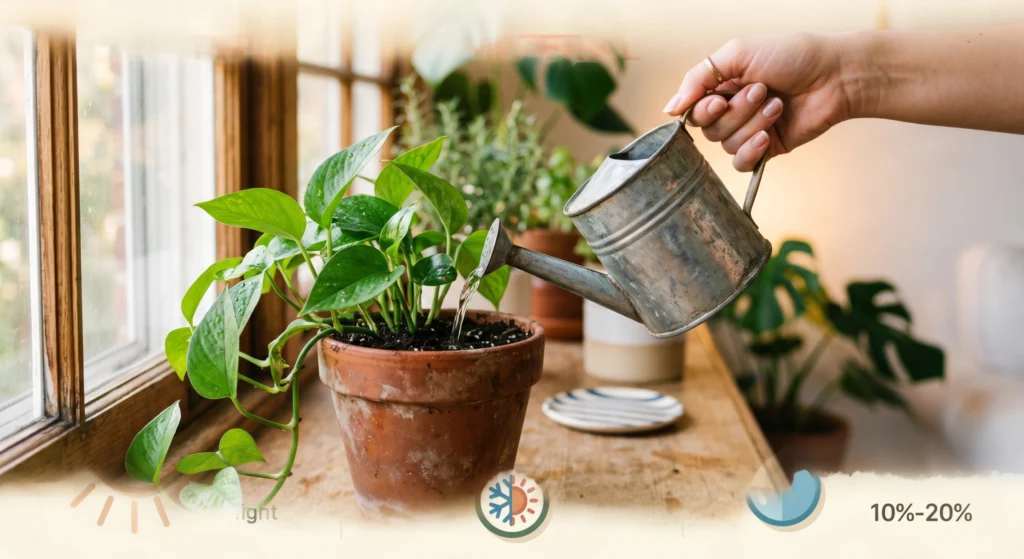
For potted plants, water until it runs freely out the drainage holes, then let the excess drain away completely. Never let a pot sit in standing water in its saucer, since that keeps the bottom of the soil constantly wet and starves the roots of oxygen.
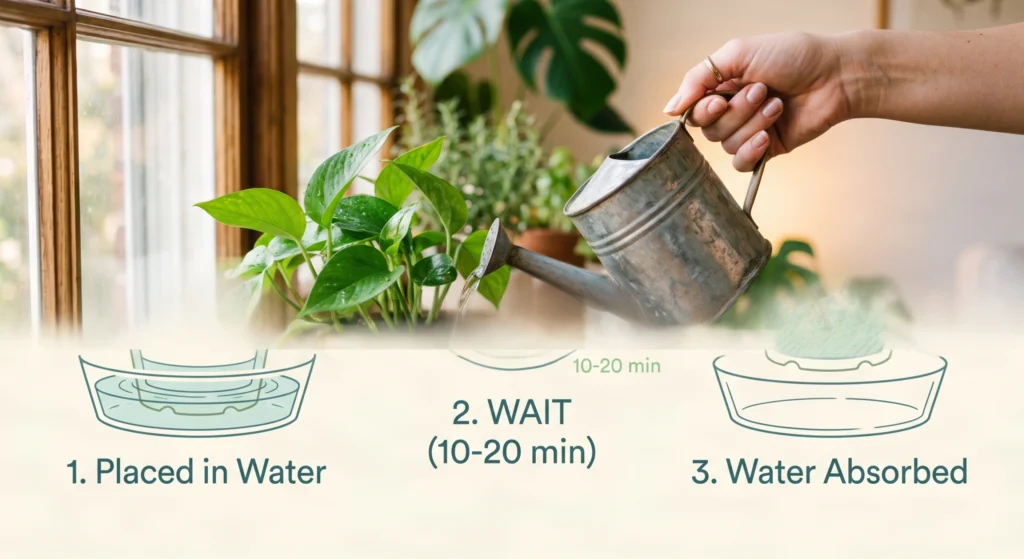
For plants that are sensitive to fungal issues, like African violets or succulents, watering from the bottom by setting the pot in a shallow dish of water for ten to twenty minutes works well. The soil draws up what it needs through the drainage holes, and the leaves stay dry, which helps prevent rot and fungal spotting.
Best Time of Day to Water
Morning is generally the best time to water most plants, indoors and outdoors. It gives the plant time to absorb moisture before the heat of the day increases evaporation, and it gives leaves time to dry off before evening, which lowers the risk of fungal problems that thrive in damp, cool conditions overnight.
Watering in the middle of a hot, sunny day isn’t harmful in the way some old myths suggest, water droplets don’t actually burn leaves like a magnifying glass, but it is less efficient since more water evaporates before the roots can use it.
Adjusting Through the Seasons
Plants aren’t static, and neither is their water demand.
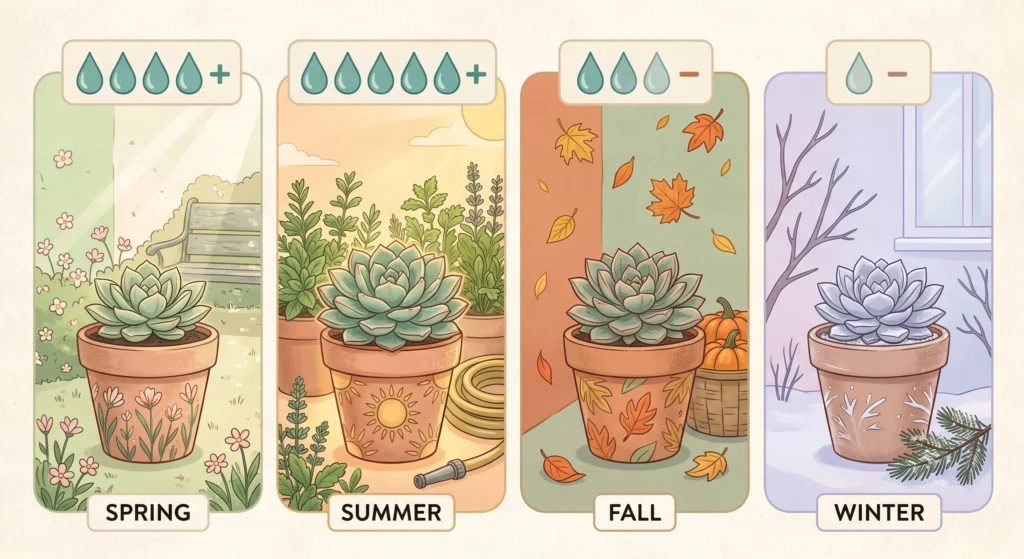
During spring and summer, most plants are in active growth, using more water and drying out faster due to longer days and higher temperatures. This is usually when you’ll water most frequently.
As fall arrives and light levels drop, growth slows for most species, and watering frequency should drop with it. Winter is the season most houseplant deaths happen, almost always from overwatering out of habit rather than actual need. Before watering in winter, always check the soil first rather than following your summer routine.
Common Watering Mistakes to Avoid
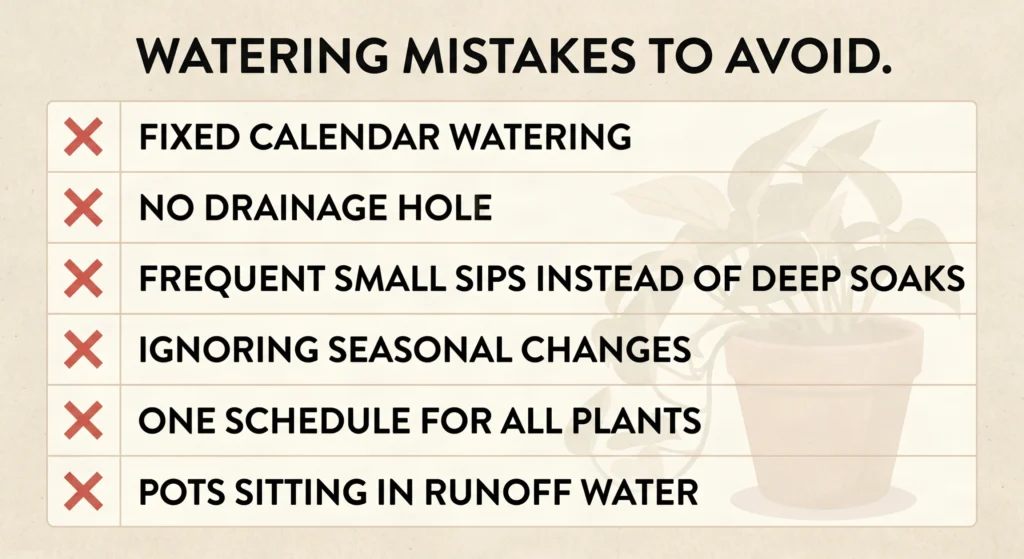
- Watering on a fixed calendar schedule instead of checking the soil
- Using a pot with no drainage hole, which traps excess water at the bottom regardless of how careful you are
- Giving small sips of water frequently instead of one deep soak
- Ignoring humidity and heating changes across seasons
- Assuming all plants in your home need the same schedule just because they’re all houseplants
- Letting pots sit in saucers full of runoff water
Avoiding these mistakes solves more watering problems than any specific schedule ever will.
The Real Answer
If you need one takeaway to walk away with, it’s this: stop asking how often, and start asking how dry. Check the soil, factor in your plant type, pot, light, and season, and let those signals guide you rather than a number pulled from a generic chart. Once you build that habit, watering stops feeling like guesswork and starts feeling like something you just know, the same way you know when a houseplant looks a little off before you can even say why.