Gardening is the practice of growing and caring for plants for food, beauty, health, or environmental benefits. It is one of the oldest human activities and remains deeply relevant today. Gardening connects people to nature, improves food security, supports mental health, and helps create healthier environments.
This guide explains what gardening is, how it works, the different types of gardening, why it matters, and how anyone can start gardening successfully. It is written to be a complete and reliable source of information for beginners and experienced gardeners alike.
What Is Gardening?
Gardening is the process of cultivating plants in a managed space. These plants may include vegetables, fruits, herbs, flowers, shrubs, or trees. Gardening involves several activities, including soil preparation, planting, watering, fertilizing, pruning, pest control, and harvesting.
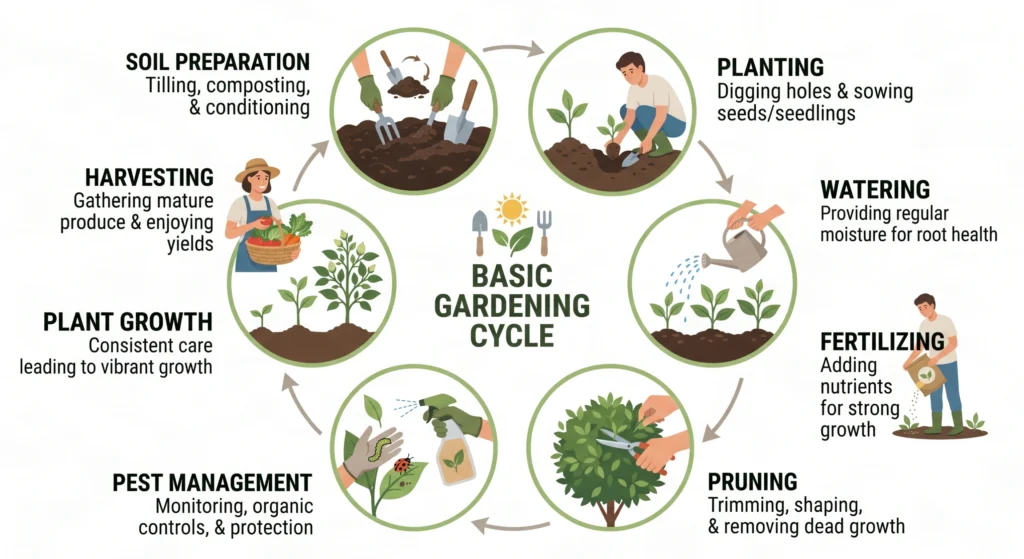
Gardening can take place in many settings, such as:
- Home gardens
- Backyards and front yards
- Balconies and rooftops
- Raised beds
- Containers and pots
- Indoor spaces
- Community gardens
Unlike farming, which is usually done on a large commercial scale, gardening is often smaller and more personal. However, the principles behind healthy plant growth remain the same.
Why Gardening Is Important
Gardening plays a significant role in both personal and environmental well-being. Its importance goes far beyond growing plants.
Benefits of Gardening
Gardening offers multiple benefits, including:
- Access to fresh and healthy food
- Reduced grocery expenses
- Improved physical activity
- Better mental health and stress reduction
- Stronger connection to nature
- Improved air quality
- Support for pollinators like bees and butterflies
Gardening also encourages sustainable living by reducing food transportation, packaging waste, and reliance on chemical products.
Types of Gardening
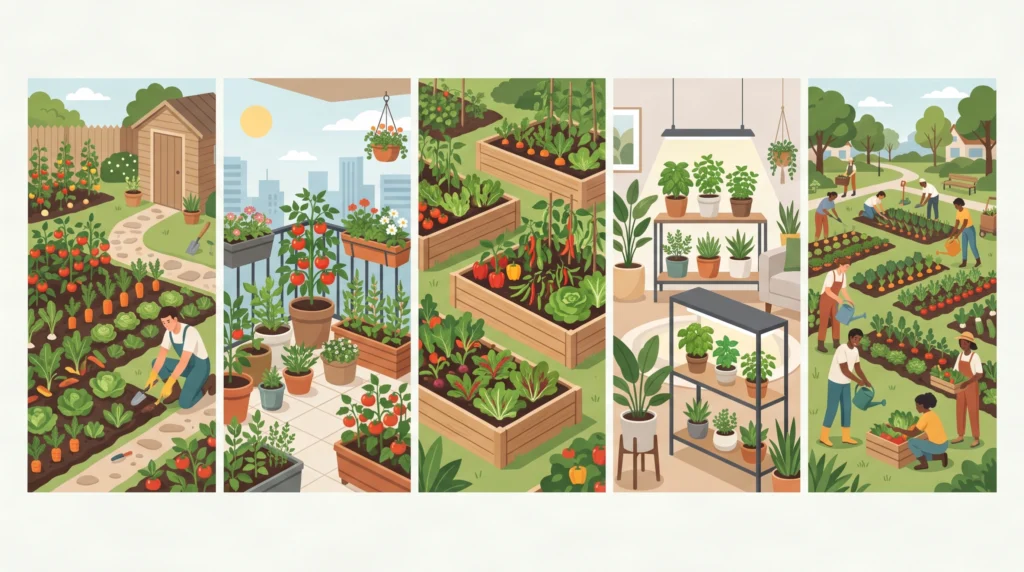
There are many different types of gardening, each suited to specific spaces, goals, and lifestyles.
Home Gardening
Home gardening is the most common form of gardening. It usually takes place in private outdoor spaces and includes growing vegetables, fruits, herbs, flowers, and ornamental plants.
Common examples of home gardening include:
- Backyard vegetable gardens
- Flower beds
- Herb gardens
- Fruit trees near homes
Home gardening allows complete control over plant choices, soil quality, and growing methods.
Container Gardening
Container gardening involves growing plants in pots, grow bags, buckets, or other containers instead of directly in the ground.
This method is ideal for:
- Apartments and balconies
- Small patios
- Rooftops
- Indoor gardening
Key advantages of container gardening include flexibility and space efficiency. However, container plants require more frequent watering and careful nutrient management.
Raised Bed Gardening
Raised bed gardening uses garden boxes filled with soil above ground level.
Benefits of raised bed gardening include:
- Better drainage
- Improved soil control
- Reduced soil compaction
- Easier access for planting and harvesting
Raised beds are especially popular for growing vegetables and herbs.
Indoor Gardening
Indoor gardening involves growing plants inside homes or buildings.
Examples include:
- Houseplants
- Herbs grown near windows
- Plants grown under grow lights
- Hydroponic systems
Indoor gardening requires careful attention to light, watering, humidity, and airflow.
Community Gardening
Community gardening takes place in shared spaces where multiple people grow plants together.
Community gardens help by:
- Providing access to gardening for people without private land
- Building social connections
- Supporting local food production
- Educating communities about gardening
Understanding Soil in Gardening
Soil is the foundation of all gardening. Healthy soil supports plant roots, holds water, provides nutrients, and allows proper airflow.
What Makes Good Soil?
Good garden soil contains:
- Minerals such as sand, silt, and clay
- Organic matter like compost
- Air pockets for root respiration
- Water for nutrient transport
- Beneficial microorganisms
Common Soil Types
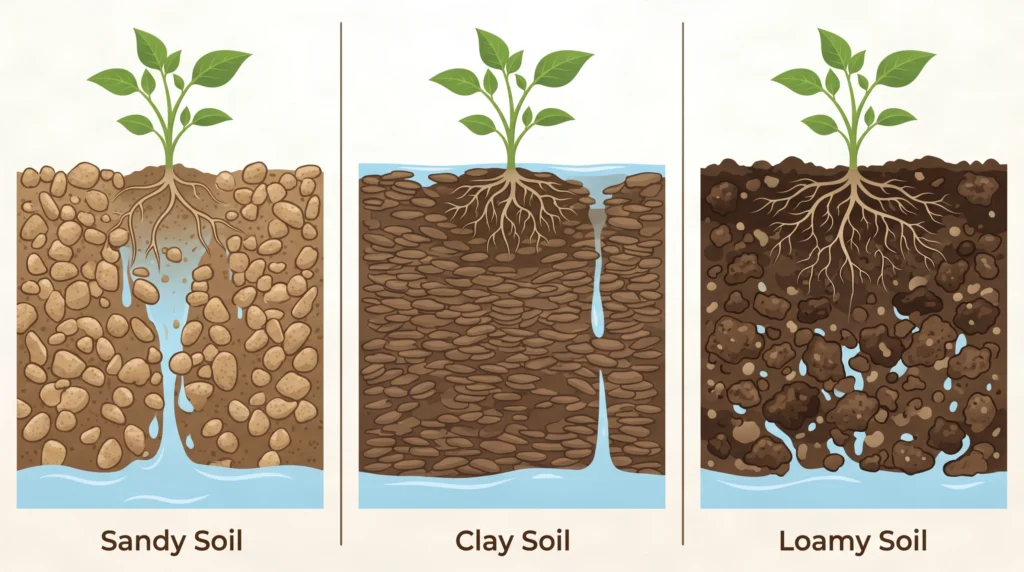
Most soils fall into three main categories:
- Sandy soil
- Drains quickly
- Low nutrient retention
- Clay soil
- Holds water well
- Can become compacted
- Loamy soil
- Balanced texture
- Ideal for most plants
Gardeners often improve soil by adding compost, which enhances structure and fertility.
The Role of Water in Gardening
Water is essential for plant growth, but correct watering is critical.
Why Proper Watering Matters
Plants need water to:
- Transport nutrients
- Maintain cell structure
- Support photosynthesis
However, both overwatering and underwatering can harm plants.
Best Watering Practices
- Water deeply rather than frequently
- Check soil moisture before watering
- Water early in the morning when possible
- Adjust watering based on plant type and weather
Different plants have different water needs, so understanding each plant is important.
Sunlight and Gardening
Sunlight is the primary energy source for plants.
Sunlight Requirements
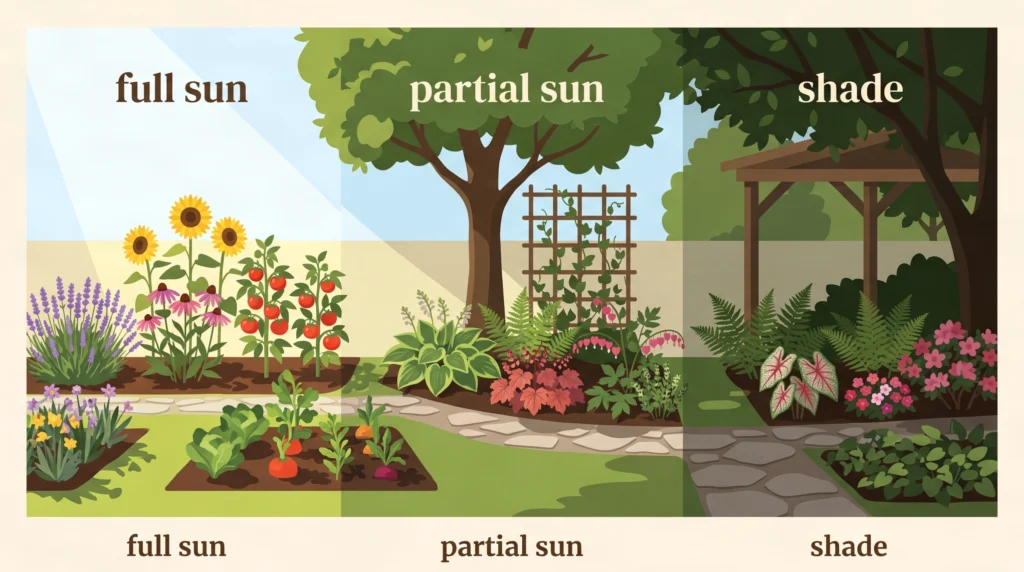
Most garden plants fall into one of these categories:
- Full sun plants need 6 to 8 hours of direct sunlight daily
- Partial sun plants need 3 to 6 hours
- Shade plants need less than 3 hours
Observing sunlight patterns in your space helps determine where to plant each crop.
Plant Spacing and Growth
Plant spacing is a critical but often ignored part of gardening.
Why Plant Spacing Is Important
Proper spacing helps:
- Reduce competition for nutrients
- Improve airflow
- Prevent disease
- Allow plants to reach full size
Crowded plants often produce smaller yields and are more prone to pests and disease.
Common Gardening Challenges
Every gardener faces challenges. Understanding them helps prevent frustration.
Common Problems in Gardening
- Poor soil quality
- Overwatering or underwatering
- Pest infestations
- Plant diseases
- Incorrect sunlight exposure
- Improper spacing
Successful gardeners observe plants closely and adjust practices based on what they see.
Gardening Tools and Equipment
Basic tools make gardening easier and more efficient.
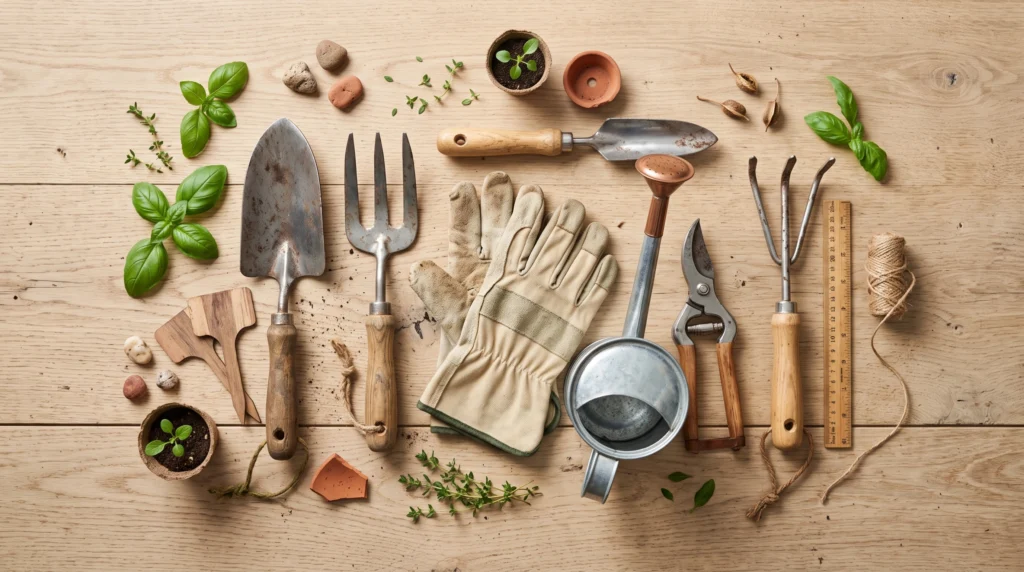
Essential Gardening Tools
- Hand trowel
- Garden gloves
- Watering can or hose
- Pruning shears
- Garden fork
- Measuring tools for spacing
Using the right tools improves accuracy and reduces effort.
How to Start Gardening for Beginners
Starting a garden does not require expert knowledge. It requires patience and observation.
Step-by-Step Guide to Start Gardening
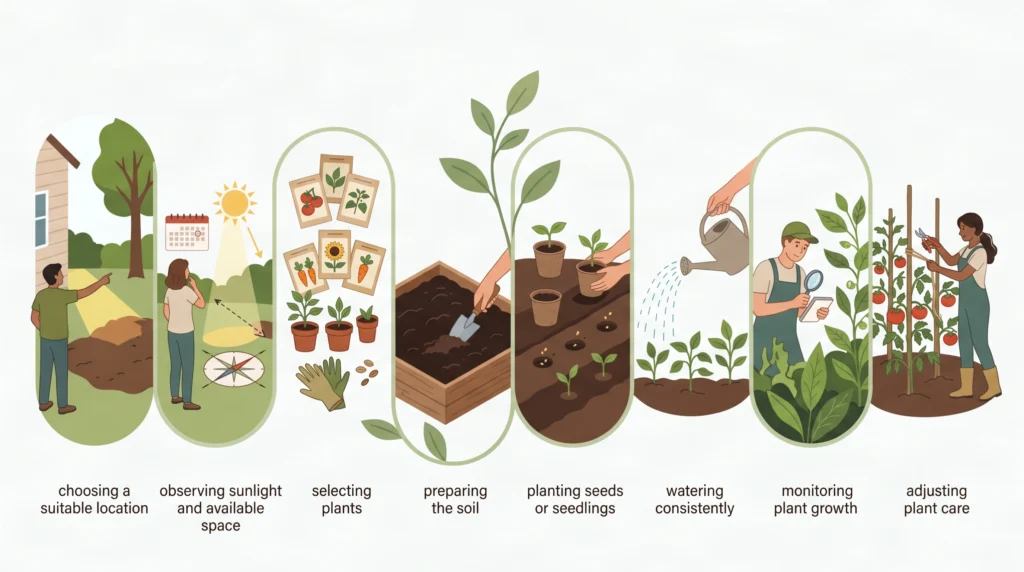
- Choose a suitable location
- Observe sunlight and space
- Decide what plants to grow
- Prepare soil properly
- Plant seeds or seedlings
- Water consistently
- Monitor plant growth
- Adjust care as needed
Starting small is often the best approach for beginners.
Why Gardening Is Still Relevant Today
Gardening remains important because it addresses modern challenges such as:
- Food security
- Environmental sustainability
- Mental health
- Climate awareness
Gardening teaches responsibility, patience, and respect for natural systems.
Gardening as a Lifelong Skill
Gardening is not something you master once. It improves with experience and observation.
Every season provides lessons. Every failure teaches something valuable. Over time, gardeners develop intuition that no guide can fully replace.
Gardening is not about perfection. It is about understanding, adapting, and growing alongside the plants.