If you just built a raised bed and you’re standing there wondering what to actually fill it with, you’re not alone. Most people assume they can grab a few bags of “garden soil,” dump them in, and start planting. Then July comes around and the tomatoes are yellowing, the roots are shallow, and the whole bed dries out every afternoon like a terracotta pot.
The soil is almost always the reason. A raised bed behaves nothing like an in-ground garden. It drains faster, heats up quicker, and doesn’t have the surrounding earth to pull moisture and nutrients from. So the mix you use has to do more work than regular garden soil ever would.
This guide breaks down what actually goes into a good raised bed mix, in what proportions, and how to adjust it depending on what you’re growing and where you live.
Why Raised Bed Soil Needs to Be Different
Ground-level gardens sit inside an ecosystem. There’s a whole web of native soil, deep roots from nearby plants, worms migrating in from adjacent yards, and a water table underneath holding some moisture in reserve.
A raised bed is an island. Whatever you put in that frame is the entire world your plants have access to. That changes a few things:
- Water drains through and evaporates faster because the bed sits above grade and often has more exposed surface area.
- Roots can’t reach down into subsoil for extra minerals once the topsoil layer is depleted.
- The soil compacts differently over a season since there’s no deep tilling or foot traffic mixing things naturally.
- Temperature swings are more extreme, which affects how fast organic matter breaks down.
That’s why “just use topsoil” or “just use potting mix” both fall short on their own. Topsoil alone gets dense and sheds water. Potting mix alone is too light and burns through nutrients within a few weeks. You need a blend that borrows strengths from both.
The Foundation: A Three-Part Blend
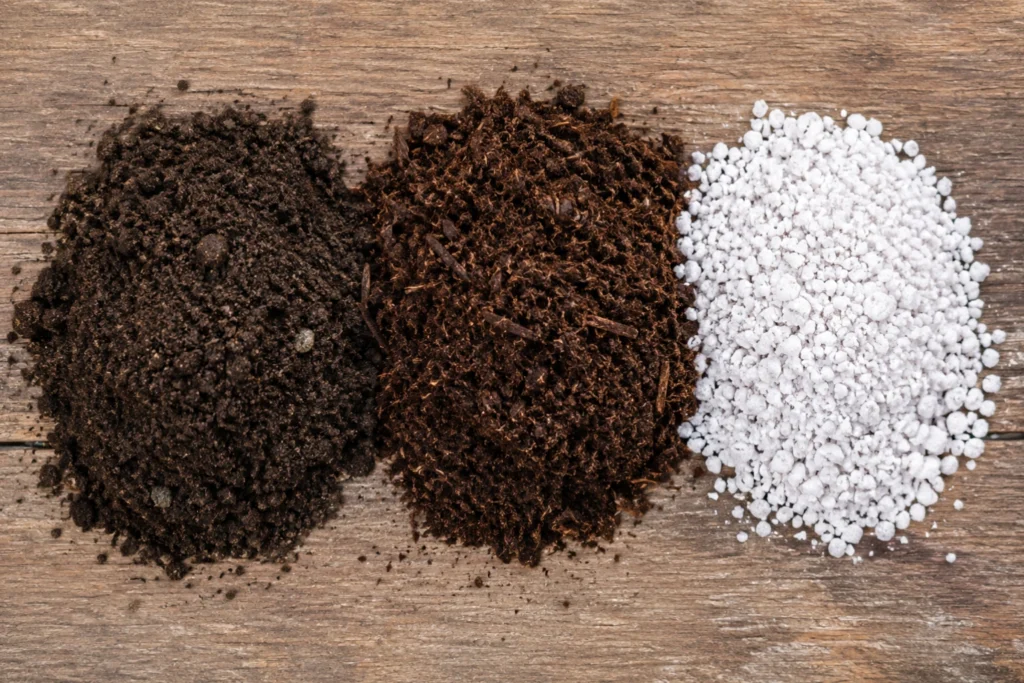
Most experienced raised bed gardeners land on some version of the same basic formula, even if they tweak the ratios:
- Roughly 40% topsoil for structure and mineral content
- Roughly 40% compost for nutrients and biological activity
- Roughly 20% aeration material (coarse sand, perlite, or pine bark fines) for drainage
This isn’t a rigid recipe carved in stone. It’s a starting ratio that works for a wide range of vegetables and flowers, and you’ll adjust it once you see how your specific bed drains and how your plants respond after the first season.
Topsoil: The Backbone
Topsoil gives the mix body. It holds onto moisture long enough for roots to actually use it, and it carries trace minerals that compost alone doesn’t fully replace.
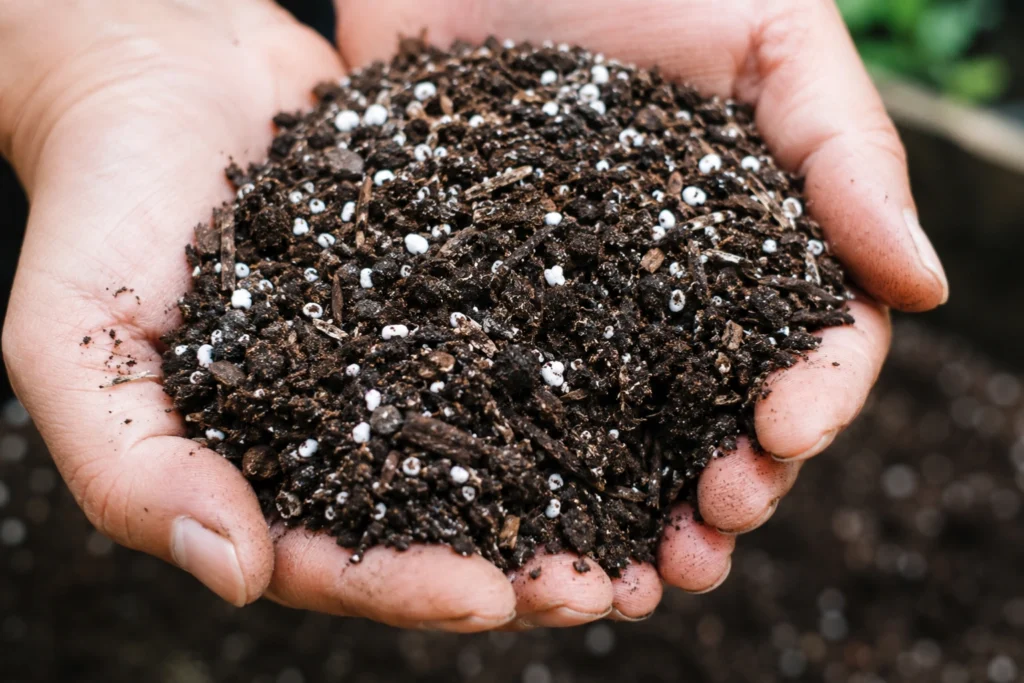
The mistake people make here is buying the cheapest bagged topsoil they can find, which is often just screened fill dirt with almost no organic content. If you’re buying in bulk from a landscape supplier, ask what it’s screened from. A decent topsoil should crumble in your hand rather than clump into a hard ball or run through your fingers like beach sand.
Compost: Where the Nutrition Comes From
Compost is doing the heavy lifting for fertility. It feeds soil microbes, improves structure over time, and slowly releases nitrogen, phosphorus, and potassium as it breaks down further.
Not all compost is equal. Municipal compost (the kind cities sell cheap or give away from yard waste programs) tends to be inconsistent in quality and sometimes carries weed seeds. Mushroom compost is nutrient-rich but can be high in soluble salts, which matters if you’re planting salt-sensitive crops like beans or carrots right away. Well-aged cow or horse manure compost works well for heavy feeders like tomatoes, squash, and corn, as long as it’s fully composted and not fresh, since fresh manure can burn roots and introduce pathogens.
If you can make your own compost from kitchen scraps and yard waste, that’s ideal because you know exactly what went into it. If not, a blend of two or three compost sources tends to even out any weaknesses in a single type.
Aeration Material: The Part People Skip
This is the ingredient most beginners leave out entirely, and it’s usually the reason a bed turns into a compacted brick by the second season.
Perlite and coarse builder’s sand are the two most common choices. Perlite is lightweight, doesn’t compact, and creates permanent air pockets in the soil. Sand is heavier and cheaper but works fine in smaller quantities. Pine bark fines are another solid option, especially for beds growing anything in the nightshade family, since they break down slowly and keep improving drainage over a couple of years rather than disappearing after one season like some organic amendments do.
Avoid fine sand or “play sand.” It packs down almost like concrete when combined with clay-heavy topsoil, which does the opposite of what you’re trying to achieve.
Adjusting the Mix Based on What You’re Growing
The 40-40-20 baseline works well as a general vegetable garden mix, but certain crops want something a little different.
Root vegetables like carrots, beets, and parsnips need loose, rock-free soil so roots can push down without forking or stunting. For these, bump the aeration material up to around 30% and sift out any clumps or debris before planting.
Heavy feeders such as tomatoes, peppers, squash, and corn do better with a compost ratio closer to 50%, since they pull a lot of nitrogen and potassium through the growing season.
Herbs and Mediterranean plants like rosemary, thyme, and lavender actually prefer leaner, faster-draining soil. For these, drop the compost to around 25% and increase aeration material closer to 30%, mimicking the rocky, low-fertility soil they evolved in.
Flowers, depending on the variety, generally do fine with the standard baseline mix, though heavy bloomers like dahlias benefit from a touch more compost.
Should You Buy a Bagged Raised Bed Mix Instead?
Garden centers now sell bagged mixes specifically labeled for raised beds, and they’re a reasonable option if you’re filling a small bed or don’t have anywhere to source bulk materials.
The tradeoff is cost. Filling even a modest 4×8 bed with bagged mix can run considerably more than sourcing the same volume in bulk from a landscape supplier. Bagged mixes also vary wildly in quality between brands. Some are genuinely well-balanced with compost, coir, and perlite already blended. Others are mostly wood fines and peat with almost no real nutrient content, meaning you’ll need to amend heavily before anything grows well in them.
If you go the bagged route, check the ingredient list rather than trusting the front label. A mix that lists compost, aged forest products, and perlite or pumice near the top is usually decent. One that’s mostly peat moss with a small amount of fertilizer mixed in will need extra compost added regardless of what the bag promises.
For larger beds, buying topsoil and compost in bulk cubic yards from a local supplier and mixing it yourself with a tarp or wheelbarrow is almost always cheaper and gives you more control over what’s actually in the soil.
Common Mistakes That Wreck a New Bed
Using straight topsoil. It compacts within a few weeks and drains poorly, especially if it has any clay content.
Skipping the aeration layer entirely. This is the single most common reason beds struggle by midsummer.
Filling with fresh, unfinished compost. It’s still actively decomposing, which pulls nitrogen away from your plants and can heat up enough to stress young roots.
Not accounting for settling. Organic matter breaks down and compacts over the season, so a bed filled to the brim in spring might sit two or three inches lower by fall. Plan to top it off with fresh compost each year rather than assuming the volume stays constant.
Ignoring pH. Most vegetables want a pH between 6.0 and 7.0. If you’re using a lot of pine bark or peat, the mix can drift acidic over time, which is worth checking with a basic soil test kit before you’re several seasons in and wondering why nothing’s thriving.
Refreshing the Mix Season After Season
A raised bed’s soil isn’t a one-time investment. Organic matter breaks down, nutrients get used up by plants, and the structure gradually compacts as microbes do their work and rain packs things down.
A good rule of thumb: top off the bed with an inch or two of fresh compost at the start of each growing season, and work in a bit more aeration material every couple of years if you notice water sitting on the surface instead of soaking in. Some gardeners rotate in a cover crop like clover or buckwheat during the off season, then till it back into the soil before it goes to seed, which adds organic matter without buying anything new.
As one longtime allotment gardener I spoke with put it,
“You’re not filling a box once. You’re feeding a living system every year, or it stops being alive.”
That’s really the mindset shift that separates raised beds that thrive for a decade from the ones that get abandoned after two disappointing summers.
A Few Regional Notes Worth Knowing
If you garden somewhere hot and dry, lean slightly higher on the compost ratio since it holds moisture better than straight mineral soil, and consider mulching the surface heavily to slow evaporation.
In consistently wet or humid climates, the opposite applies. Push the aeration percentage up a bit so the bed doesn’t stay waterlogged, which invites root rot and fungal issues, especially in beds without drainage holes or hardware cloth at the bottom.
If your native soil is heavy clay, resist the temptation to just improve the ground beneath the bed with the same ratio you use inside it. The interface between two very different soil types can actually trap water at the boundary layer, so a thin layer of coarse gravel or sand at the very bottom of the bed, right where it meets native clay, helps water move through instead of pooling.
Getting Started
If you’re filling a bed for the first time, a simple approach that works reliably is combining bagged or bulk topsoil, a mix of two compost types, and perlite or pine bark fines in roughly the 40-40-20 ratio, then adjusting from there once you see how your specific plants respond after a season. Test the pH once things are in, keep an eye on drainage after a heavy rain, and plan to top the bed off with compost each spring rather than treating the initial fill as a permanent solution.
Soil in a raised bed is never really finished. It’s a mix you keep tending, one season at a time, and it gets better the longer you pay attention to it.