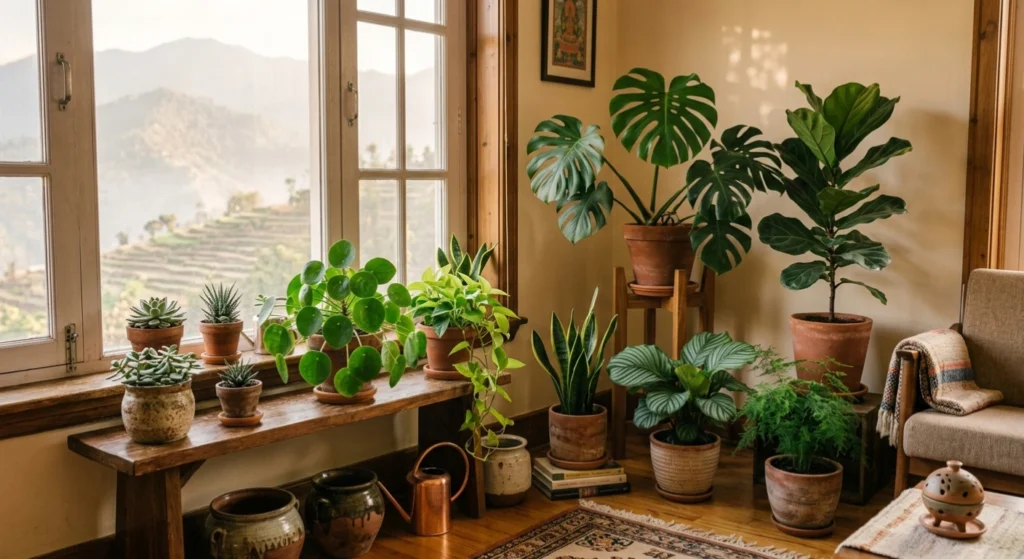
If you’ve ever stood over a houseplant with a watering can in hand, wondering whether you’re about to save it or drown it, you already know the honest answer to this question isn’t a neat little number. There’s no universal “water every Tuesday” rule that works for a cactus, a fern, and a tomato plant all at once. Plants don’t read calendars. They respond to their environment, their species, and the conditions right in front of them.
That said, there is a system to figure this out, and once you understand it, watering stops being a guessing game and starts being something you can actually feel confident about. This guide walks through what really determines how much water a plant needs, how to read the signals your plants are already giving you, and practical watering approaches for different types of plants so you’re not left second-guessing every time you pick up the can.
Why There’s No Fixed Watering Schedule
A lot of plant care advice online treats watering like a math problem. Water this much, this often, done. The problem is that two identical plants sitting in two different rooms can have completely different needs.
A pothos on a sunny windowsill in a terracotta pot will dry out far faster than the same pothos sitting in a plastic pot in a dim corner. Change the pot material, the light, or the room’s humidity, and you’ve changed the entire equation. This is why so many people accidentally kill plants with kindness. They follow a schedule instead of paying attention to what’s actually happening in the soil.
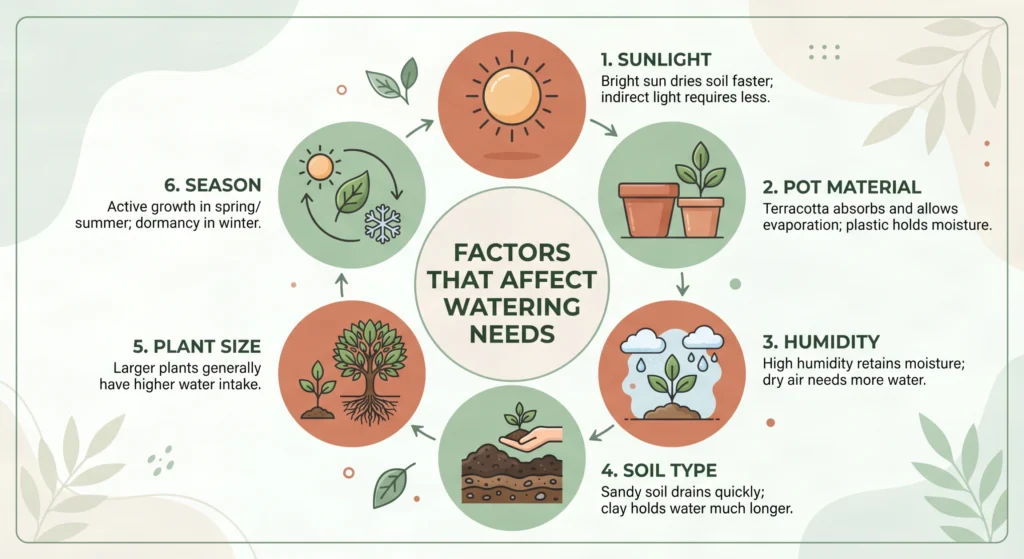
Understanding water needs means understanding the variables that drive them. Once you know those, the schedule takes care of itself.
The Real Factors That Determine How Much Water a Plant Needs
Plant Type and Native Habitat
Where a plant originally comes from tells you almost everything about how it handles water. Succulents and cacti evolved in arid regions, so they store water in their leaves and stems and can go long stretches without a drink. Tropical plants like calatheas or ferns come from humid rainforest floors, so they’re used to consistently moist soil and struggle when things dry out completely.
Vegetables and herbs sit somewhere in the middle. Most garden staples like tomatoes, peppers, and cucumbers need steady moisture, especially once they start fruiting, but they still don’t want to sit in soggy soil.
Pot Material and Drainage
Terracotta and unglazed clay pots are porous, so they pull moisture out of the soil and let it evaporate through the sides. Plastic and glazed ceramic pots hold water much longer. If you switch a plant from plastic to terracotta without adjusting your watering habits, you’ll likely end up underwatering it without realizing why.
Drainage holes matter just as much. A pot without proper drainage traps water at the bottom, which suffocates roots over time even if the topsoil looks dry.
Light Exposure
More light generally means faster soil drying, since photosynthesis and transpiration both speed up. A plant sitting in bright, direct sun will need water more frequently than the same plant tucked away in low light, even if everything else about the setup is identical.
Humidity and Airflow
Indoor heating and air conditioning both strip moisture from the air, which pulls moisture out of soil and leaves faster. Homes in dry climates or during winter heating season often need more frequent watering for houseplants than the same homes during humid summer months.
Outdoors, wind has a similar drying effect on garden soil, which is part of why exposed, breezy spots need more attention than sheltered ones.
Soil Composition
Sandy soil drains fast and doesn’t hold onto water well. Clay-heavy soil holds water for a long time, sometimes too long, which can lead to root rot if it doesn’t drain at all. A well-balanced potting mix with organic matter sits in between, holding enough moisture for roots to access while still letting excess water pass through.
Plant Size and Root Development
A young seedling with a small root system needs far less water than a mature plant with an established root network, simply because there’s less to sustain. As roots grow deeper, they can also access moisture further down in the soil, which changes how often the surface needs to be topped up.
Season and Growth Stage
Most plants slow down during dormant periods, usually late fall and winter for many houseplants and perennials. During dormancy, water needs drop noticeably because the plant isn’t actively producing new growth. Spring and summer, when plants are pushing out new leaves and flowers, is when water demand climbs.
Signs Your Plant Is Underwatered
Plants are fairly vocal about their needs if you know what to look for.
- Leaves turning crispy or curling at the edges, especially on the lower or older leaves first
- Soil pulling away from the sides of the pot, sometimes leaving a visible gap
- Wilting that improves shortly after watering, which is a strong clue that dryness is the cause
- Slower growth or leaves that feel thin and papery to the touch
- Soil that feels bone dry more than an inch or two down
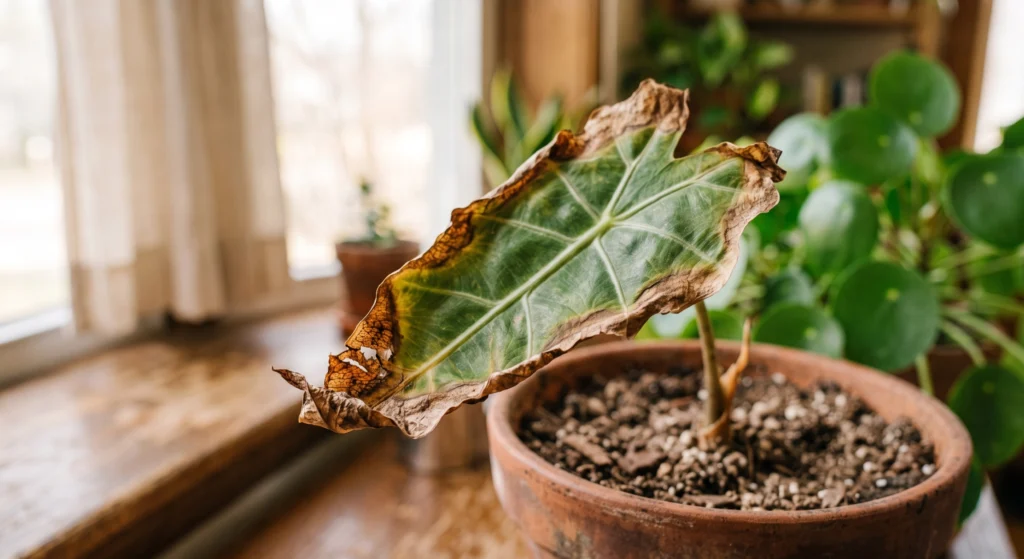
If you catch these signs early, most plants bounce back quickly once you give them a thorough soak.
Signs Your Plant Is Overwatered
Overwatering tends to be sneakier because the symptoms can look similar to underwatering at first glance, which is exactly why so many people respond to a drooping plant by watering it more and making things worse.
- Yellowing leaves, particularly ones that feel soft or mushy rather than crispy
- A musty or sour smell coming from the soil
- Wilting that doesn’t improve after watering, or actually gets worse
- Soil that stays wet for days after watering rather than drying at the surface
- Mold or fungus gnats hovering around the soil surface
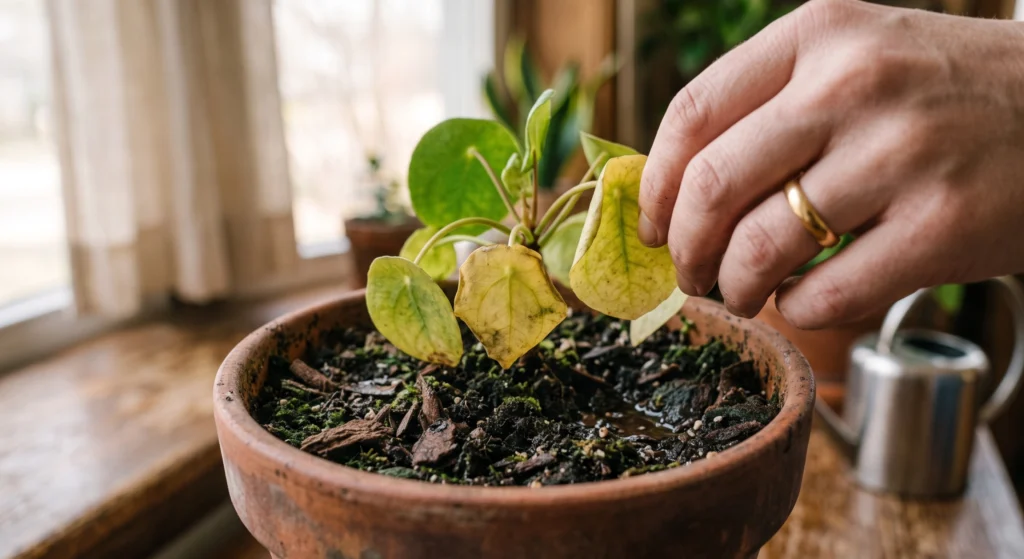
If you’re seeing these signs, the fix usually isn’t more water. It’s often better drainage, less frequent watering, or in serious cases, repotting into fresh soil to address root rot before it spreads.
How to Actually Check If a Plant Needs Water
Instead of watering on a fixed schedule, use a quick physical check before you reach for the can.
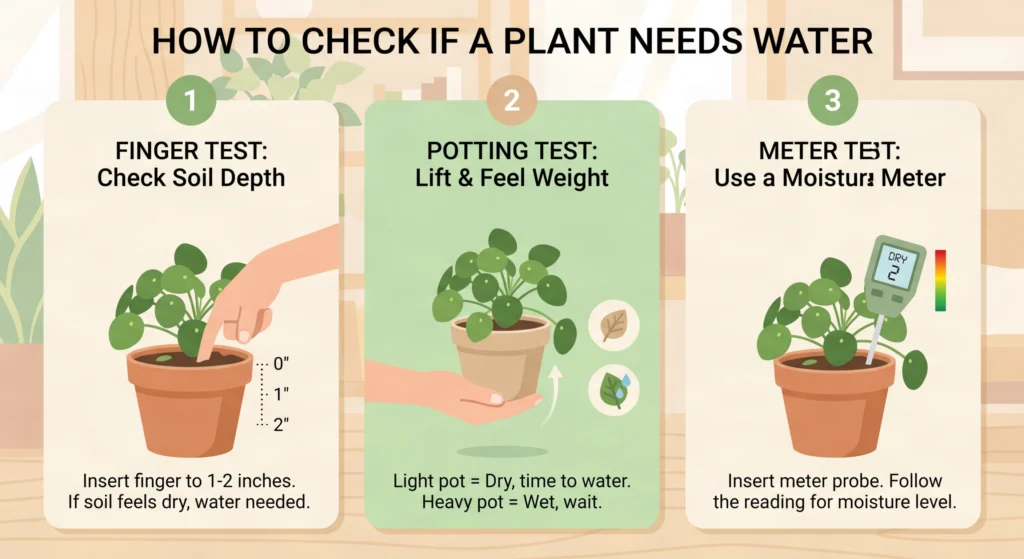
The finger test. Stick your finger about one to two inches into the soil. If it feels dry at that depth, it’s usually time to water. If it’s still cool and damp, wait.
The weight test. Pick up the pot. A dry pot feels noticeably lighter than a recently watered one. Over time, you’ll get a feel for what “needs water” weighs like for each of your plants.
A moisture meter. These inexpensive tools give a numeric reading of soil moisture at root depth, which takes some of the guesswork out, especially for larger pots where your finger can’t reach far enough down.
Watching the leaves. Some plants, like peace lilies, droop dramatically right before they need water and perk back up almost immediately after. Once you learn a plant’s particular tell, you can water based on behavior rather than a calendar.
Watering Guidelines by Plant Type
Succulents and Cacti
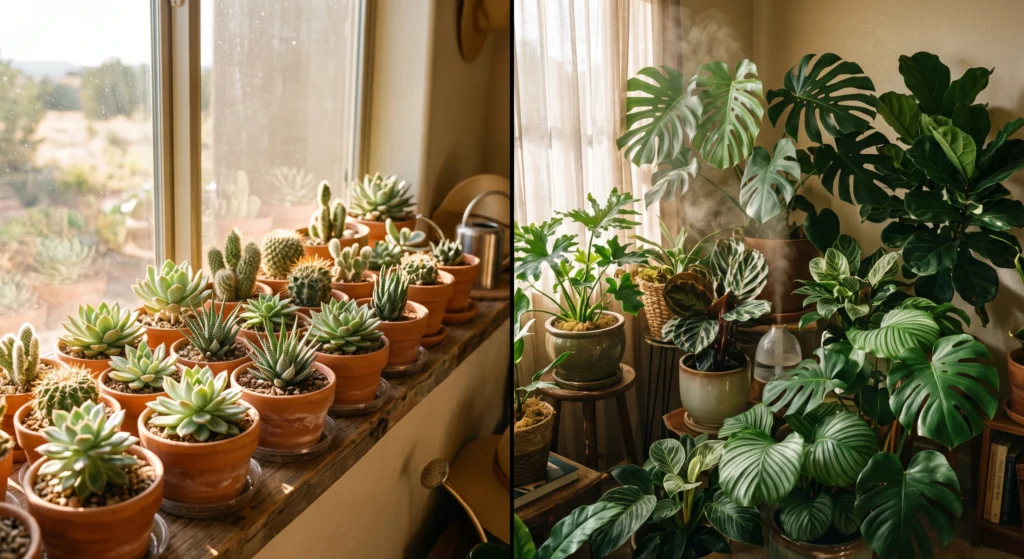
These plants store water in their tissue and genuinely prefer to dry out completely between waterings. A good rule is to let the soil dry out fully, then water deeply so it soaks through the entire pot, then leave it alone again. Watering on a fixed weekly schedule is one of the fastest ways to rot a succulent’s roots.
Tropical Houseplants
Plants like monsteras, philodendrons, and calatheas generally like the top inch or two of soil to dry out before their next watering, though calatheas and other high-humidity lovers appreciate slightly more consistent moisture than something like a snake plant, which can handle long dry stretches.
Herbs
Herbs grown in pots, especially basil and mint, dry out fast because they’re often in smaller containers with a lot of leaf surface pulling moisture out. Checking these daily during warm months isn’t excessive. Woodier herbs like rosemary and thyme are more drought tolerant and prefer drier conditions between waterings.
Vegetable Gardens
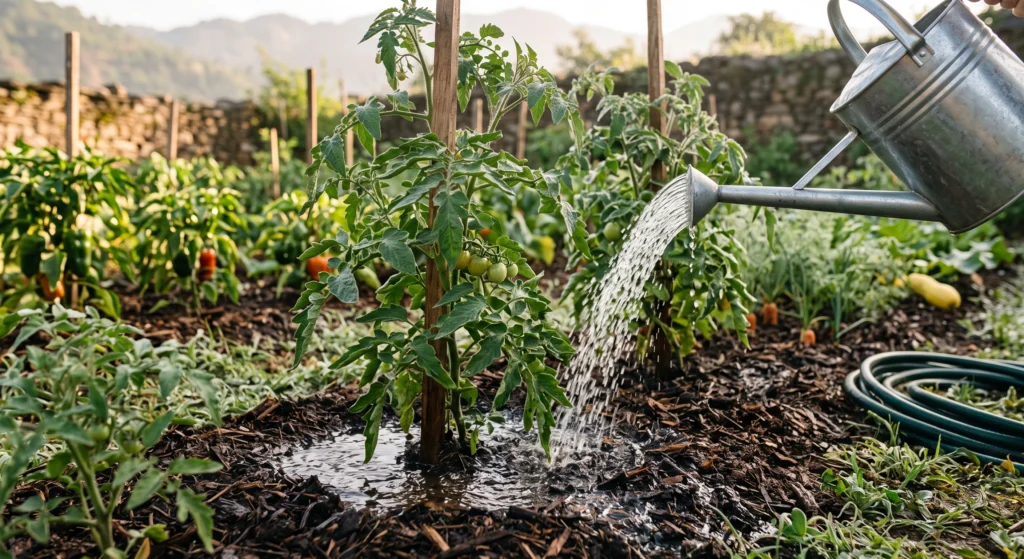
Vegetables need consistent moisture, particularly during flowering and fruiting stages. Inconsistent watering, like letting tomatoes dry out completely and then flooding them, is a common cause of issues like blossom end rot and split fruit. A deep, less frequent watering schedule that soaks the root zone tends to work better than frequent shallow sprinkles, which only wet the surface and encourage roots to stay shallow.
Outdoor Garden Beds and Perennials
Established garden beds often need less frequent attention than people assume, especially once plants have deep root systems. A general approach is to water deeply and less often rather than lightly and daily, which encourages roots to grow downward in search of moisture rather than staying near the surface.
Lawns
Grass generally prefers infrequent, deep watering over frequent light watering. Watering early in the morning reduces evaporation loss and gives grass blades time to dry before evening, which also helps prevent fungal issues.
Adjusting for the Seasons
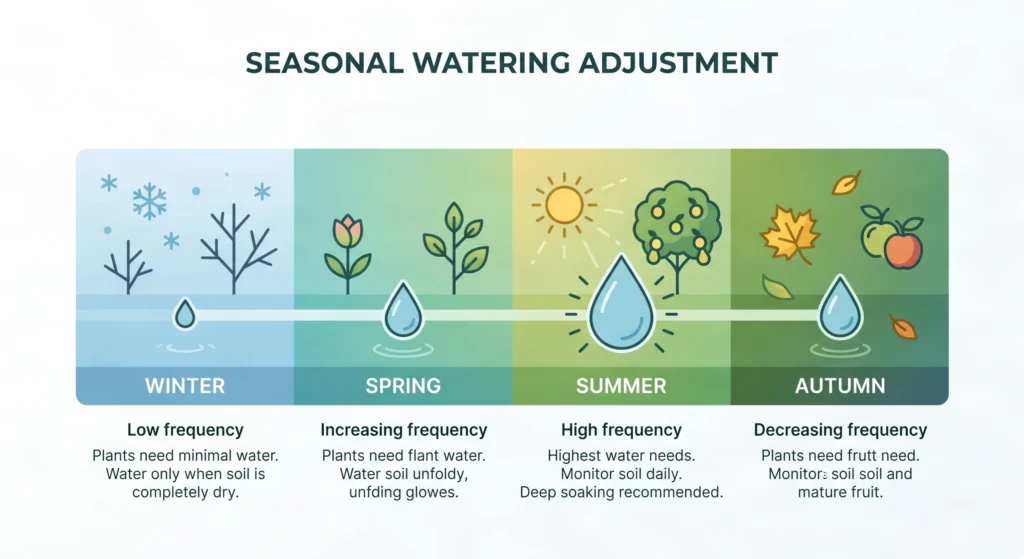
Watering needs shift throughout the year, and this is where a lot of people fall behind. A plant that needed water twice a week in July might only need it every couple of weeks in January if it’s gone semi-dormant. Reducing water during dormant months isn’t neglect. It’s actually what the plant needs to rest properly.
The reverse is true in spring. As new growth kicks in, thirst increases, and plants that seemed fine on a slow winter schedule may suddenly need more frequent attention.
Common Watering Mistakes Worth Avoiding
- Watering a little bit every day instead of a deep soak less often, which trains roots to stay shallow and weak
- Ignoring drainage holes, which leaves excess water trapped and suffocating the roots
- Watering on autopilot instead of checking the soil first
- Assuming all plants in the same room need the same schedule, even when pot size, material, and light exposure differ
- Using cold water straight from the tap on sensitive tropical plants, which can shock the roots
As one longtime nursery owner I spoke with a while back put it,
“People don’t kill plants because they don’t care. They kill them because they care too much, at the wrong times.”
That line has stuck with me because it captures something true about overwatering specifically. It usually comes from good intentions and a lack of trust in the plant’s own signals.
Bringing It All Together
Figuring out how much water your plants need really comes down to observation more than memorization. Pay attention to the pot, the light, the season, and the specific plant in front of you, and check the soil before you assume anything. Once you get a feel for how a particular plant behaves when it’s thirsty versus when it’s had enough, watering stops being stressful and starts being intuitive.
Give your plants what they’re actually asking for, not what a generic schedule says they should want, and you’ll notice the difference in how they grow.